

If you’re facing constant financial anxiety even if everyone around you tells you you’re doing “well” financially, you’re not alone. These feelings are valid, especially when you live in an ultra-high-cost-of-living area like New York.
Feeling anxious about money, even when you’re objectively considered a high earner, is more common than most people realize. You might have a good income and stable job. Yet you still find yourself lying awake thinking about bills, retirement, future expenses, or what would happen if you lost your job.
Financial anxiety isn’t just about income or debt. It’s about how uncertain or unsafe your situation feels. And because that’s often subjective (more tied to perception than reality), mental health treatment can make a big difference in helping you deal with it.
If you’re a high earner in New York and still find yourself worrying excessively about your finances, here’s how to deal with it, and how financial anxiety treatment can help.
Why you still have financial anxiety as a high earner
The data shows that many people with higher education and professional jobs who, on paper, earn “enough”, continue to live with money anxiety. According to the Wall Street Journal, the thresholds for financial anxiety are moving further and further up the income ladder.
There are unique factors that may contribute to this phenomenon.
Income paradox survey
One core factor is that because of inflation, every dollar simply doesn’t go as far as it used to. A recent survey by The Harris Poll found that 1 in 3 people making over $100,000 per year reported being “stretched, struggling, or drowning financially.” Over 50% of these earners check their bank accounts before buying groceries.
Objective data shows that we’re all paying significantly more of our income on housing, food, utilities, and other basic expenses. You may have worked hard to reach an income you once thought would make you feel financially secure, only to find that the goalposts have moved.
Especially in New York, six figures (what others may think of as a high income) may barely cover your family’s needs.
HENRYs
Financial anxiety can especially affect a group of people sometimes called HENRYs (high earners, not rich yet). HENRYs carry substantial debt or live with ongoing pressure to maintain a certain lifestyle. Student loans, mortgages, and career instability can all contribute to stress.
If you belong to this group, you might have financial anxiety because you haven’t reached true financial stability yet (despite what your tax returns say about your income).
Money dysmorphia
Money dysmorphia describes when how you feel about your financial situation doesn’t match your actual reality. It’s a relatively new phenomenon that experts believe is driven by social media and comparison culture.
Most of the time, money dysmorphia presents as being financially “behind” (in investments or retirement accounts) or not having enough, even when you objectively do. It can also cause you to feel pessimistic about your financial goals, which can ironically lead to impulsive spending decisions that actually do put you behind.
Comparison with high-earning peers
Your frame of reference also significantly matters. If you live in New York or work in an industry where extremely high incomes are common, your idea of what counts as “doing well” financially can start to be altered.
You may compare yourself with colleagues who own larger homes and have higher net worth. It can start to seem like everyone is ahead of you when it comes to financial milestones. Financial anxiety can then become driven by the feeling that you’re falling behind, even when your actual financial situation is objectively stable compared to most people.
Fear it will all go away
A high income can also feel surprisingly fragile. Especially if you work in an industry affected by large-scale layoffs or market boom-bust cycles, you may know firsthand that earning well today doesn’t guarantee anything the next year.
In addition, your expenses may have grown along with your career. You may have a mortgage, private school tuition for your children, and other larger expenses that depend on your high income.
This can leave you feeling constantly afraid of the possibility that everything could disappear, that the rug could suddenly be pulled out from under you at any moment. Even during financially successful periods, it may be difficult to actually feel secure.
Common symptoms of financial anxiety in high earners
“Financial anxiety” or “money anxiety” are common terms that people use, but neither is a recognized psychiatric diagnosis and therefore has no official list of symptoms.
If you experience these signs, you may be diagnosed with generalized anxiety disorder or another anxiety disorder depending on your exact symptoms.
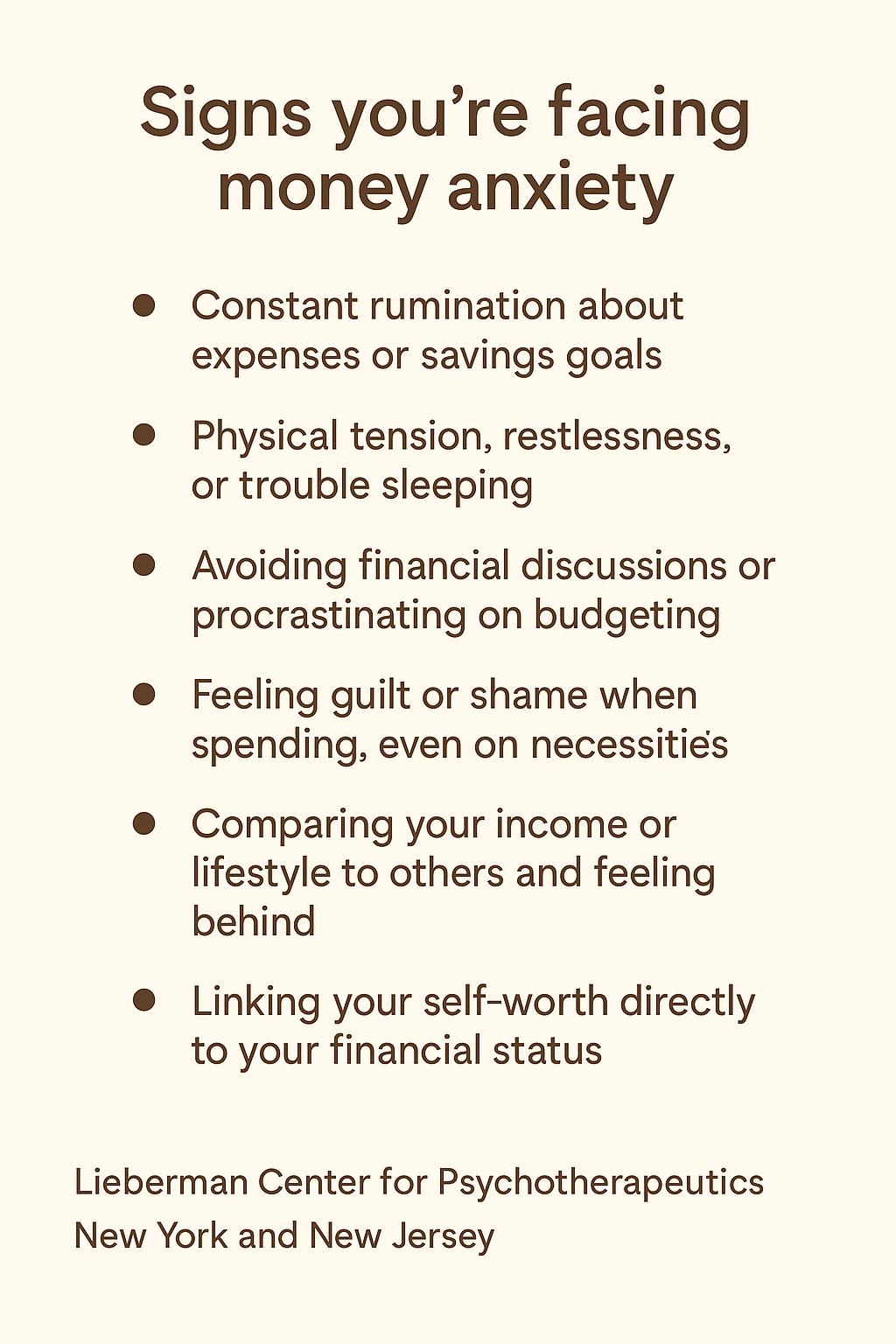
- Excessive worries about money: The primary symptom of financial anxiety is excessively worrying about money and your financial future. You might have racing thoughts or repeatedly run through “what-if” financial scenarios in your head.
- Feelings of guilt when you spend money, even if it’s on something you need.
- Constant rumination about expenses or savings goals, even during leisure time.
- Physical tension, restlessness, or trouble sleeping, especially before payday or when you need to pay major bills.
- Avoiding financial discussions or procrastinating on budgeting because it feels overwhelming.
- Comparing your income or lifestyle to others and feeling behind.
- Linking your self-worth directly to your financial status.
You’ll notice that none of these symptoms reflect your objective financial status. Researchers differentiate between objective financial strain (your actual debt or income) and subjective strain (how worried you feel about it). The two don’t always match. You can have wealth on paper but still feel constant pressure (or vice versa: be struggling financially but still feel confident and in control).
Living with these symptoms can start to significantly affect your well-being over time. It’s not just debt or income itself that matters, but the perception of being financially strained.
How to overcome financial anxiety when you already have a high income
When you already are a high earner but still continue to live with financial anxiety, then the generic tips you find online to manage money worries may not be relevant to you. You already have a clear budget and contribute the max to your retirement accounts. You already have an emergency fund and then some.
But you continue to feel anxious. This may be because you need to deal with the anxiety that’s underneath your finances, not your finances themselves.
Here are some ways you can overcome financial anxiety and protect your emotional well-being.
Think about your relationship to money
Start by reflecting on how you view money and what your relationship with it has been, both in the past and now. For some people, money equals safety. For others, it represents success, love, control, etc.
If you grew up without enough, the sense of scarcity may linger even after you’re stable. If you were raised to equate financial worth with personal value, you might feel anxious no matter how much you earn. Understanding these deeper associations can help you see your financial situation more clearly, instead of looking at it through the lens of fear and trauma.
Find mentors you can relate to
Financial anxiety can be isolating, especially if it comes with feelings of shame. As a high earner, you might feel guilty for worrying about finances when you know that many people objectively have less.
It may help to talk with mentors or peers who understand your situation or have similar financial responsibilities. Their advice may be more useful than generic financial guidance because they understand the pressures that can come with your profession or income level. Talking to them may also help you feel less alone, especially if they also struggle with financial anxiety.
Learn how to calm your nervous system
Financial pressure activates the same stress response as any other perceived threat. It’s not about “weakness”; it’s just how your nervous system responds. There are science-backed techniques you can intentionally use (like grounding exercises, deep breathing, or mindfulness practices) that help calm your body’s reaction.
Even a few minutes of diaphragmatic breathing (inhaling slowly through the nose and exhaling longer through the mouth) can lower your heart rate and reduce cortisol. Again, money anxiety is often subjective. These exercises can physically reduce stress and anxiety.
Create a clear financial plan
Sometimes, financial anxiety and poor financial habits can become locked in a vicious cycle. Not knowing exactly where you stand can make you more anxious, while anxiety can lead you to avoid looking closely at your finances or make decisions based on fear.
Get clear about your actual financial situation and what you’re working toward. Consider meeting with a financial advisor you trust who has experience working with people at your income or net worth level.
Having a concrete plan can make financial decisions feel less arbitrary. It can also help you distinguish between risks you genuinely need to prepare for and fears that aren’t supported by your actual financial situation.
Address the root causes
Financial anxiety doesn’t usually suddenly start in adulthood. Maybe your family avoided talking about money, or financial instability was part of your childhood. Cultural messages around success and self-reliance can also shape how you feel about earning and spending.
You may also have learned that earning more was supposed to make you feel successful or safe. When you finally reach those goals and still don’t feel secure, it can be confusing.
Addressing these root causes of your anxiety with a therapist can help you unpack these beliefs and how they may still be affecting you today.
Get financial assistance if you need it
If your income is high but your expenses or debts still feel unmanageable, professional guidance can make a difference. That might mean taking steps like refinancing loans, consolidating credit cards, or consulting a fiduciary financial planner who can look at your full picture.
Even temporary relief methods, like deferring payments or renegotiating rates, can give your nervous system time to recover from constant stress. You can think more clearly about finances when you’re not drowning in anxiety.
Consider mental health support
Research shows that financial worry can seriously affect your concentration, relationships, or sleep. You might even start to develop symptoms of mental health conditions like depression or anxiety. Mental health treatment, like therapy and medication management, can help you identify the patterns behind your money worries and start to overcome them.
Some people use cognitive-behavioral therapy (CBT) to challenge catastrophic or irrational money thoughts. You might also consider anti-anxiety or antidepressant medications to help you manage symptoms, especially if they’re severe. You don’t need to wait until things feel “bad enough.” Addressing money stress early can protect both your mental health and financial well-being.
Financial anxiety treatment in New York and Long Island
High-earning professionals often minimize their stress about money because it doesn’t fit the stereotype of “financial struggle.” But the research shows that financial anxiety can affect anyone, regardless of income level.
At The Lieberman Center for Psychotherapeutics, we work with high-achieving professionals who find that money continues to be a source of stress, no matter how much they earn.
Treatment is personalized to help you understand the emotional patterns behind your financial anxiety and find ways to feel more secure in the life you’ve worked so hard to build. Treatment is not about helping you manage your money, but about easing the psychological burden that finances place on you.
If financial anxiety is interfering with your sleep, relationships, or ability to enjoy your success, we can help. Learn more about financial therapy in New York and Long Island or schedule a free consultation today.