

“Wall Street burnout” can sound like a vague mental health buzzword. But when you work in the financial sector, burnout can have serious, and sometimes deadly, consequences.
In 2024, 35-year-old Leo Lukenas III, an investment banker at Bank of America, died of a cardiac event. He had reportedly been trying to leave his job because of the grueling hours. In 2025, a junior finance analyst died by suicide; users of the industry forum site Wall Street Oasis reported that he worked over 100 hours in the week leading up to his death.
This isn’t meant to scare you into self-care. But it’s important to be real about the mental and physical health costs of working on Wall Street so that you can take steps to protect yourself.
Burnout can make you feel trapped, especially when your career provides financial security and a sense of accomplishment. But you still have choices. You may be able to recover while remaining in finance, or you may decide that you want to move to a different role.
What are the signs of Wall Street burnout?
Burnout on Wall Street isn’t a sign that you, as an individual, are weak or a failure. It happens because you’re constantly exposed to systemic policies and working conditions that don’t prioritize your well-being.
You work 100-hour weeks with little to no control over your schedule. You face constant pressure to stay available. You’re constantly pinged, even when you’re off the clock. Mistakes could affect your reputation and cost millions. It’s a lot of pressure for one person to carry.
Burnout can be difficult to recognize in this culture because it feels like everyone’s in the same boat. So it’s important to look closely for warning signs so you can take action early.
Physical signs
- You feel exhausted even after sleeping or taking time off.
- You have frequent headaches, stomach problems, or muscle tension.
- You experience heart palpitations, chest tightness, or shortness of breath, especially during stressful periods.
- You struggle to fall asleep or wake up thinking about work.
- You rely on caffeine or stimulants to function during the day.
- You use alcohol, sleep medication, or another substance to wind down at night.
Psychological and behavioral signs
- You can’t focus; for example, you reread the same email or presentation because the information is no longer registering.
- You’ve started making careless mistakes in work that would normally feel simple or routine.
- You feel unusually angry or irritable, which may make you lash out at colleagues or family.
- You feel panicked or totally defeated by late-night requests. But you still have a hard time saying no.
- You dread email notifications or seeing a particular person’s name on your screen.
- You feel guilty when you’re not working, even during scheduled time off. You may even cancel your plans because you’re afraid you could be called back any second.
- You become emotionally numb or increasingly cynical about your work.
- You feel hopeless, like there’s no realistic way to change or improve your life.
- You fantasize about getting sick or having another reason you would be forced to stop. This may include thoughts about dying or ending your life.
If you’re having thoughts of suicide or feel unable to keep yourself safe, contact emergency services or call the crisis line at 988 right away.
The symptoms of burnout can overlap with the symptoms of depression, anxiety, insomnia, and substance use problems. A mental health professional can help you understand what is happening, especially if these symptoms continue even when you’re away from work.
The serious mental health consequences of high finance burnout
It’s important to take the word “burnout” seriously. It isn’t just about being mildly stressed at work. It’s not something you can just work your way through with willpower. It’s a very real health phenomenon that can have serious consequences in every area of life.
Here are some of the biggest ways that Wall Street burnout can affect your life and health.
Poor work-life balance
You may have understood that long hours and sleepless nights were part of the job when you chose a career on Wall Street. You may not come into this expecting to have amazing work-life balance. But that doesn’t remove your need for meaningful time away from work.
When you constantly need to prioritize work, you may lose touch with friends or miss important family events. Romantic relationships can become strained because you don’t have much left to give. When you’re socially isolated, you lose an important source of protection against stress. Without outside relationships, the culture of overwork may begin to feel normal, even if you’re barely functioning.
Not having a life outside of work can also mean that identity becomes tied almost entirely to your performance. This can feed the cycle even further.
Long hours and sleep deprivation
Sleep deprivation has very real health effects proven by research. It can affect your attention and emotional control. It can also increase blood pressure, lead to high cholesterol, weaken your immune system, and more.
It’s hard to “catch up” on sleep. Taking a few nights off to recover can’t undo months of severe sleep loss. When you regularly work through the night or sleep only a few hours, your body isn’t allowed to recover on a very basic level.
Dependence on drugs and alcohol
People cope with stress and burnout in different ways. In the finance industry, many cope by using substances, especially stimulants like cocaine.
It makes sense. Stimulants can help you feel more alert, which you might feel you need when you’ve already worked all day and still have hours left. They can help you stay upright when you’re running on little to no sleep. Stimulants can also create a temporary sense of confidence or focus.
But stimulants can increase your heart rate and blood pressure. High doses can increase the risk of dangerous cardiac problems, which in some cases can lead to death.
Junior bankers may be especially vulnerable. They have less control over their schedules and may worry that refusing to “party” will damage their career.
Suicide risk
The 2025 suicide is just one of too many examples of people in this industry taking their own lives. A 22-year-old Goldman Sachs analyst died by suicide just hours after expressing distress to his father about 100-hour work weeks. In 2015, a string of jumping suicide deaths shook Wall Street.
According to official numbers, people who work in finance don’t have a higher risk of suicide than the general population. But that doesn’t mean the risk isn’t worth taking seriously. Certain personal factors, like depression or substance use, can increase suicide risk. Research also shows that severe sleep deprivation is linked with suicidal thinking.
Contact emergency services or dial 988 if you feel unable to keep yourself safe.
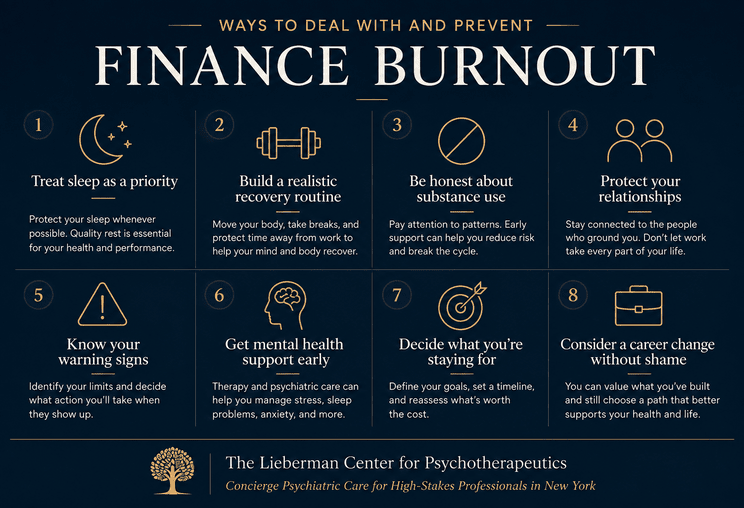
How to avoid burnout as an investment banker
It’s possible to both avoid and recover from burnout, especially when you take action before you reach your breaking point.
For some people, leaving high finance is the healthiest choice. But change may be possible within your current position. You want to stay because the compensation supports your family or long-term goals. You also genuinely enjoy the work. All of these factors matter and deserve to be considered.
Treat sleep as a medical priority
You only have 24 hours in a day, and time can feel extremely limited during an active deal. But sleep can’t always be the first thing you sacrifice.
Protect your sleep whenever possible. Look at sleep as a medical necessity (which is what it is), not a luxury. Avoid adding unnecessary work or pulling all-nighters simply to put on the appearance that you’re working hard.
Also, pay attention to the quality of your sleep, not just the number of hours. You may spend enough time in bed but wake up during the night or feel like you can’t turn off your thoughts.
Create a realistic recovery routine
Recovery does not need to look like an elaborate wellness program or an overseas retreat. Real recovery needs to happen regularly enough that your body gets time to come down from a state of constant stress. Annual retreats are great, but they don’t make up for a year’s worth of intense stress.
One way to build recovery into your daily life is through exercise. Exercise has been shown to significantly reduce stress and anxiety. Many people who work in finance use exercise as a way to let off steam and keep themselves healthy.
In addition, try to protect at least one part of your week from work, even if it’s just a few hours. Time away from the office only counts as recovery when your brain is allowed to disengage. Staying available for every after-work message keeps your stress response active.
Be honest about substance use
Pay attention to your substance use habits. Using substances occasionally may not be a huge concern. But needing stimulants or alcohol to meet the normal expectations of work is probably a sign that the expectations themselves are unsafe.
Other substance use warning signs include taking more than you intended or hiding your use from people close to you.
If your substance use is becoming concerning, talk to someone you trust. You don’t need to wait for a crisis or severe addiction before discussing substance use with a professional.
Protect your relationships
Burnout often convinces you that relationships can wait until work becomes less busy. The problem is that on Wall Street, the work may never get less busy. Often, you need to make an intentional decision to prioritize your relationships.
Choose at least one relationship that you protect consistently. This may mean a standing dinner with your partner or a weekly call with someone you trust.
Tell people when you’re struggling rather than disappearing. They may not be able to change anything practical, but they can help you stay connected to a life outside the office. It can also help to stay connected to people outside of the finance industry. These people can offer perspective and help you realize when things are unreasonable.
Get mental health support early
You don’t need to reach a breaking point to benefit from therapy or psychiatric care. Early treatment can prevent burnout from developing into mental health concerns like anxiety and depression. It can also address issues like insomnia or substance use.
Confidentiality concerns can make finance professionals hesitant to seek treatment. Ask prospective providers how they protect your privacy and document treatment.
It can also help to work with someone who understands high-performance workplaces. You shouldn’t have to spend each appointment explaining why compensation or professional status makes it complicated to leave your job.
Consider a career change without treating it as failure
For some people, these recovery tips may not be enough. You may feel strongly that you can’t be healthy and work in finance at the same time. Whatever decision you make is valid.
Leaving an investment banking role doesn’t erase what you achieved or the skills you developed. Quitting isn’t weakness. It also doesn’t need to happen all at once. You might move to a different team or pursue a different role within finance with more predictable hours. Some people need medical leave before they can think clearly about the next step.
It’s also okay to decide to stay. The financial benefits of this job are real and important. So if you’re going to stay despite burnout, define the trade-off as specifically as possible. For example, you may be working toward a savings goal or trying to reach a certain stage in your career. Set a date to reassess what you want so you don’t feel trapped.
New York integrative psychiatry services for finance professionals
At the Lieberman Center for Psychotherapeutics, we work with high-performing professionals who need care that fits the complexity of their lives. Our integrative approach to mental health treatment includes a psychiatric evaluation, medical review, and blood work to identify factors contributing to your symptoms. Treatment can include medication management, psychotherapy, and referrals to additional support (like coaching).
Our concierge-style model allows for more personalized attention than brief medication appointments. If you work in finance or any other high-pressure field, we can help you address burnout-related symptoms while considering your current health and long-term goals.
Book a free 15-minute consultation to speak with our founder and learn more about our services.